A buyer scrolling listings for Fair Haven this year sees a median sale price somewhere between $1.4 million and $1.5 million and assumes the town simply got more expensive. That is the wrong read. Fair Haven's median did not rise because existing homes are worth more today than they were a year ago. It rose because the housing stock underneath the median is being replaced, one lot at a time, by something else entirely.
That distinction matters if you are comparing Fair Haven to Rumson, Red Bank, or Little Silver on price alone. A rising median can mean the whole market got stronger, or it can mean the cheap end of the market is disappearing while the expensive end grows. In Fair Haven right now, it is mostly the second thing.
The Math Nobody Runs When They See the Median
Fair Haven covers about two square miles and holds roughly 2,600 homes. In a town that small, the median moves fast when even a handful of transactions shift category. Here is what is shifting.
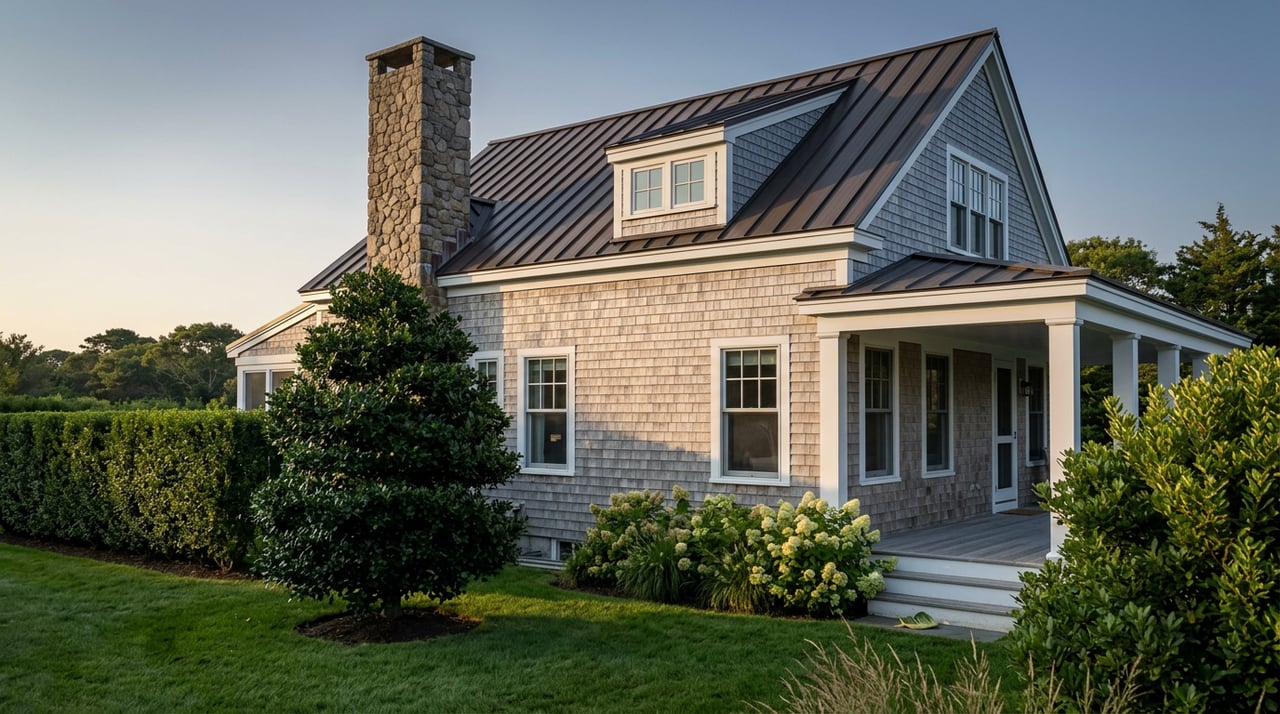
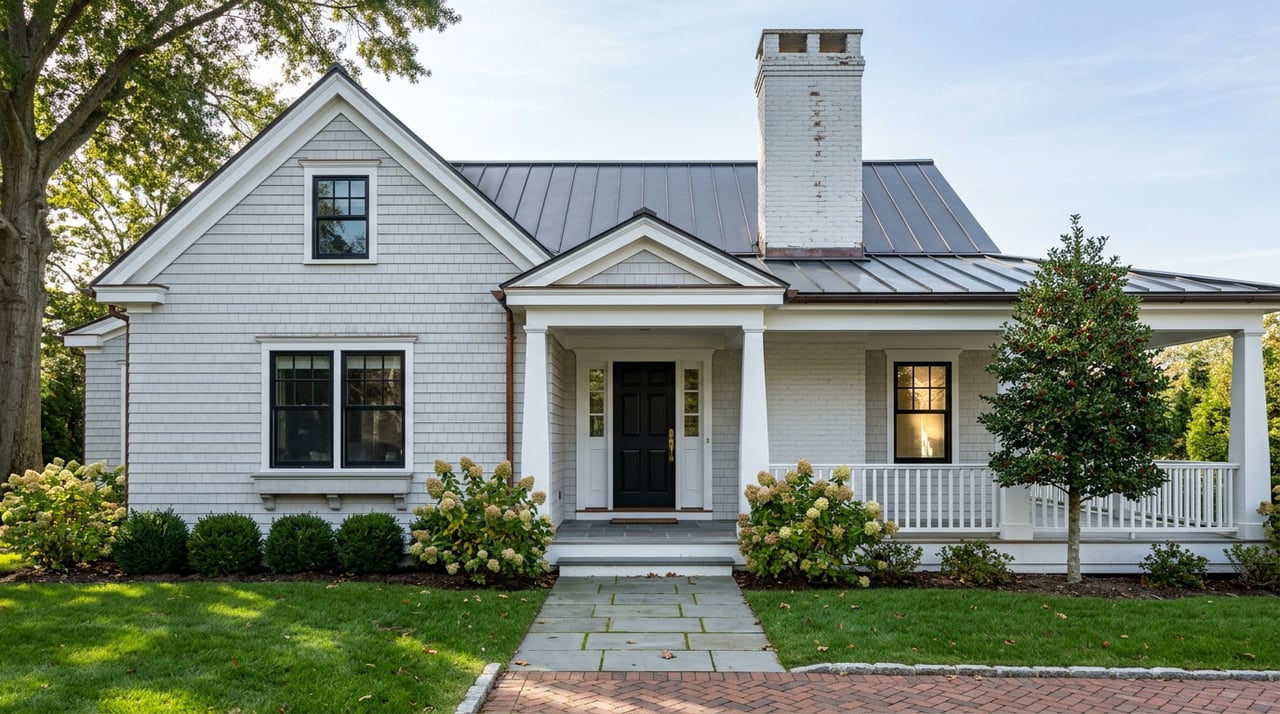
Builders are actively buying the borough's older Capes and ranches, the kind that once served as entry-level family homes, in the $780,000 to $950,000 range. They tear the house down and build new Shore Colonial product that lists for $2 million to $3 million.
| What sells | Typical price | What happens to it |
|---|---|---|
| Pre-1970s Cape or ranch | $780,000 to $950,000 | Purchased by a builder, demolished |
| New Shore Colonial on the same lot | $2 million to $3 million | Listed and typically absorbed within weeks |
Every one of those transactions removes a home from the entry tier permanently and adds one to the luxury tier. Run that pattern across even a dozen sales a year in a town this size, and the median climbs without a single existing homeowner seeing their equity grow through ordinary appreciation. The number on the portal is measuring a change in the mix of what's for sale, not a uniform rise in value.
Why the Builder Wins the Bid
If you're a family hunting a $900,000 starter home in Fair Haven, you are not competing against other families for it. You are competing against a builder's spreadsheet.
A builder can pay full retail for that Cape because the house itself has no value to them. What they're buying is the lot, and the lot supports a $2 million to $3 million new build. That math lets a builder outbid a family every time a well-priced entry-level home hits the market, because the builder's return comes from the teardown, not the structure standing on it today.
This is why active inventory at the lower end has been compressing through 2026. It isn't that fewer families want to sell. It's that fewer of those sales end up as another family's starter home. The seller gets a strong number either way, but the buyer pool for anything under $1 million shrinks a little more with each closing.
A ZIP Code That Borrows Its Prestige
None of this works without demand strong enough to support $2 million to $3 million exit prices, and Fair Haven's demand comes from a source that has nothing to do with anything inside its own borders.
Fair Haven has no train station. It has no downtown in the way Red Bank has one. What it has is ZIP code 07704, wedged on the Navesink River between Rumson and Red Bank, and the regional market treats it like an extension of the Rumson peninsula because functionally, that's what it is.
Buyers who lose out on a Rumson house end up looking at Fair Haven. Buyers priced out of the upper end of Red Bank end up here too. The borough absorbs overflow demand from both directions at once, and because so few homes trade hands here in a given month, that demand rarely gets satisfied fast enough to soften prices.
A median price tells you what the middle home sold for. It says nothing about whether the market underneath it changed shape.
That's the piece easy to miss when comparing towns side by side on a spreadsheet. Fair Haven's price tag is borrowed prestige from its neighbors as much as it is anything generated internally.
The Tax Bill That Reads Better Than It Feels
Here's a number that looks like good news until you multiply it out. Fair Haven's median effective property tax rate sits near 1.66 percent, well under New Jersey's statewide median of roughly 2.82 percent. On paper, that's one of the more favorable tax rates in the state.
But Monmouth County reassesses annually, and Fair Haven's home values are high enough that a lower rate still produces a median annual tax bill near $14,128. A homeowner comparing that rate to a neighboring town with a higher percentage but a lower assessed value might end up paying more here in raw dollars, not less. The rate is a genuine advantage. The bill is still a seven-figure home's worth of tax.
The County-Wide Tailwind That Has Nothing to Do With Fair Haven
Zoom out, and there's a second force working in the same direction, one that has nothing to do with anything happening inside Fair Haven itself.
Netflix is building a $1 billion production studio on 292 acres of the former Fort Monmouth, spanning Eatontown and Oceanport. Construction crews marked a real milestone this summer, topping off the structural beam on Stages 3 and 4 in June 2026, with the first soundstages expected online in 2027. State officials have projected a statewide economic impact running into the billions over the life of the project.
Fair Haven sits well outside the footprint of that development. No part of the studio touches the borough directly. What a project of that scale does instead is raise the floor under the entire county's desirability, and Fair Haven, as a small premium sub-market inside that county, gets lifted along with everything around it. It's one more reason the entry-tier compression described above is unlikely to reverse itself anytime soon.
What This Means If You're Actually Shopping Fair Haven
If you're looking at Fair Haven right now, the practical takeaway is less about whether the town is "worth it" and more about which version of the market you're actually shopping.
- If you want an older, entry-tier home under $1 million, you are moving on a shrinking pool and competing with buyers who can pay in cash and close fast, since builders often can.
- If you're comfortable with new construction at $2 million and up, you're not paying for local schools or downtown walkability so much as you're paying for scarcity in a two-square-mile town that rarely has more than single digits of active listings at any price point.
- Days on market here has bounced between roughly 16 and 33 days across recent 2026 windows. That's a wide swing for a market this small, and it says more about how few homes trade each month than it does about demand suddenly cooling or heating.
None of these are reasons to avoid Fair Haven. They're reasons to know exactly which slice of the market you're stepping into before you write an offer.
A Few Straight Answers
Is Fair Haven's price growth a bubble? Not based on what's driving it. A bubble typically reflects speculative buying detached from fundamentals. Here, the median is rising because the underlying housing stock is being physically replaced with higher-value construction, and demand is anchored by real spillover from Rumson and Red Bank rather than speculation.
How does Fair Haven compare to Rumson or Red Bank on price? Fair Haven trades close to Rumson pricing without Rumson's larger lots or riverfront concentration, and close to upper Red Bank pricing without Red Bank's own downtown or train station. It occupies a middle position that borrows demand from both.
Will the teardown trend slow down in 2026? Nothing in the current data suggests it will. As long as builders can buy entry-tier homes at $780,000 to $950,000 and exit at $2 million to $3 million, the incentive to keep buying and rebuilding remains intact.
If you're trying to figure out where Fair Haven actually fits against Rumson, Red Bank, or Little Silver for your specific budget and timeline, that's exactly the kind of comparison The Mallan Group works through with buyers every week. You can also browse current listings and market activity on our Fair Haven neighborhood page. Reach out for a free home valuation and a straight read on what your budget actually buys across the towns you're weighing.